Top 10 Settings to Maximize Your CS2 FPS
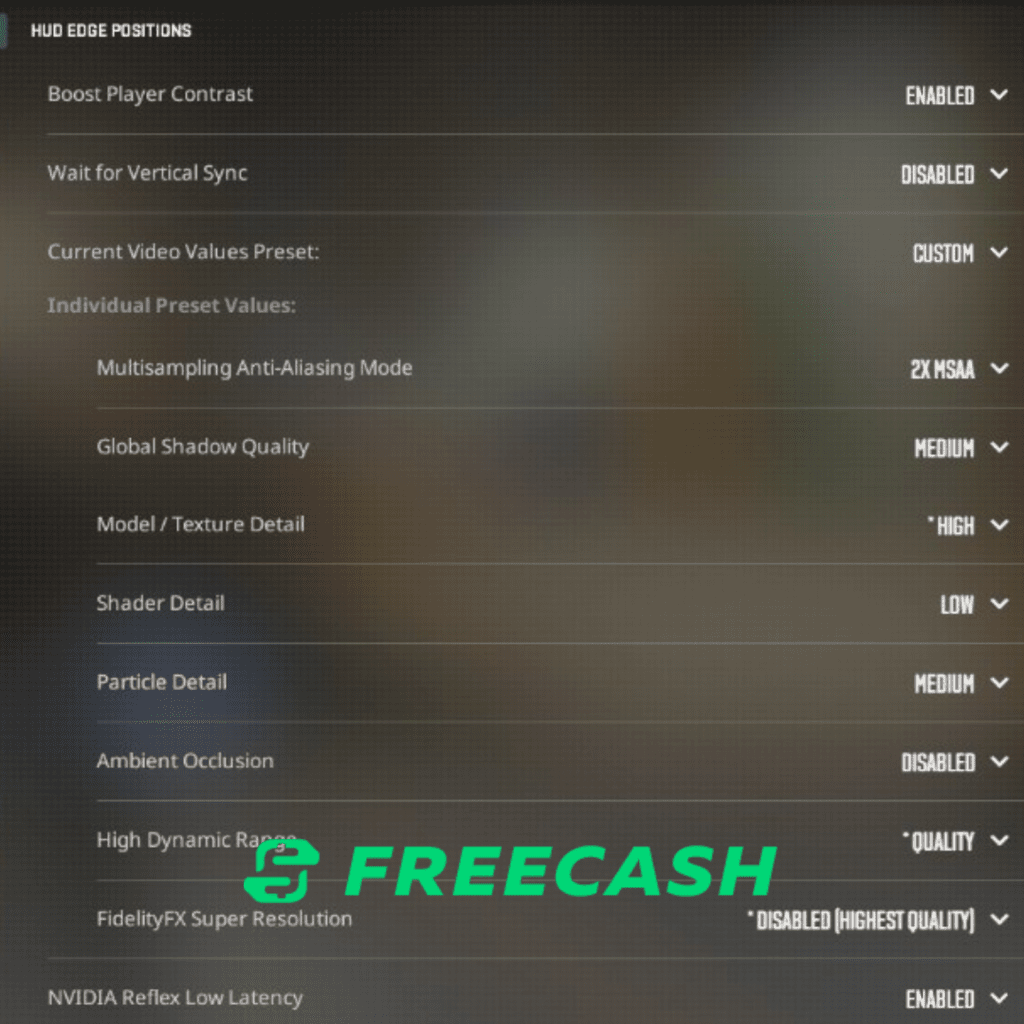
To enhance your gameplay experience in Counter-Strike 2 (CS2), optimizing your settings for better frames per second (FPS) is crucial. Here are the top 10 settings to help you achieve maximum performance:
- Resolution: Lower your screen resolution to boost FPS. A smaller resolution means fewer pixels for the graphics card to process.
- Graphics Settings: Set the graphics quality to low or medium. This reduces texture details and disables unnecessary effects.
- Anti-Aliasing: Disable anti-aliasing to improve FPS. While this may result in jagged edges, the performance gain is worth it.
- Texture Filtering: Set texture filtering to Bilinear or Trilinear for better performance.
- Vertical Sync: Turn off vertical sync (V-Sync) to eliminate input lag and boost FPS.
- Shadow Quality: Keep shadow settings on low to save valuable resources.
- Effects Quality: Lower the effects quality to minimize visually demanding elements that can drain your FPS.
- Model Detail: Set model detail to low to accelerate frame rates.
- Resolution Scale: Adjust the resolution scale down to further improve performance without significantly sacrificing visual quality.
- Network Settings: Optimize network settings to ensure a smoother online experience and better performance.
Counter-Strike is a popular multiplayer first-person shooter that pits teams of terrorists against counter-terrorists. Players can choose from various weapons to utilize in their gameplay, including the powerful m249, known for its high fire rate and damage output. Strategy, teamwork, and skill are key elements that contribute to the game's enduring success in the esports arena.
Common Myths About Lag in CS2: What You Need to Know
When it comes to online gaming, particularly in popular titles like CS2 (Counter-Strike 2), players often encounter the frustrating issue of lag. Many gamers hold common myths about lag that can lead to misunderstandings about its causes and solutions. One prevalent myth is that lag is solely caused by the player's internet connection. While a poor connection is certainly a factor, other elements such as server load, geographical distance from the server, and even hardware limitations can significantly contribute to the lag experienced in-game.
Another misconception is that increasing the game's graphics settings will reduce lag. In reality, higher graphics settings can strain your system's resources, potentially leading to increased lag instead. To optimize performance, players should focus on lowering graphics settings while ensuring a stable and fast internet connection. Additionally, regularly updating your hardware and software plays a crucial role in minimizing lag. Understanding these common myths about lag in CS2 helps players make informed decisions to enhance their gaming experience.
How to Optimize Your System for a Smoother CS2 Experience
To enhance your gameplay in CS2, optimizing your system is essential. Start by ensuring that your graphics drivers are updated to the latest version. This allows your system to fully utilize the capabilities of your GPU, leading to better performance and visuals. Additionally, consider adjusting your in-game settings for optimal performance: reducing the resolution, disabling unnecessary graphical features, and selecting the appropriate render mode can significantly improve frame rates.
Another crucial aspect of optimizing your system is managing background applications. Programs running in the background consume system resources that could otherwise improve your CS2 experience. Use the Task Manager to close any unneeded applications before launching the game. Moreover, regularly defragging your hard drive and clearing temporary files can enhance loading times and overall performance. By following these steps, you'll ensure a smoother and more enjoyable experience in Counter-Strike 2.